
Published on:
Stalking charges occupy a distinct category within Florida's criminal justice system because they inherently involve an ongoing pattern of behavior directed at a specific victim. Unlike a bar fight or a drug possession arrest, where the criminal act is a discrete event, stalking is defined by repetition and persistence. That pattern-based nature makes judges particularly cautious at the bail stage, because releasing the defendant on bond creates the immediate question of whether the defendant will resume the stalking behavior.
Florida Statute 784.048 defines three tiers of stalking offenses: stalking (a misdemeanor), aggravated stalking (a felony), and stalking with specific aggravating circumstances that further increase the severity. The bail process, the conditions of release, and the practical realities of living under those conditions differ significantly depending on which tier applies.
Understanding the Charge Tiers
- Stalking (F.S. 784.048(2)): Willfully, maliciously, and repeatedly following, harassing, or cyberstalking another person. First-degree misdemeanor. Up to 1 year in jail, $1,000 fine. Bond: $1,000 - $5,000.
- Aggravated stalking (F.S. 784.048(3)): Stalking with a credible threat to the victim, or stalking in violation of an existing injunction or court order. Third-degree felony. Up to 5 years in prison, $5,000 fine. Bond: $10,000 - $50,000.
- Aggravated stalking of a child (F.S. 784.048(5)): Stalking a child under 16 years of age. Third-degree felony with potential for enhanced penalties. Bond: $15,000 - $75,000+.
The escalation from misdemeanor stalking to aggravated stalking often happens when the defendant already has a restraining order or injunction against them and continues the stalking behavior. This is a common pattern: the victim obtains an injunction for protection, the defendant violates the injunction by continuing to contact or follow the victim, and the violation converts what would have been a misdemeanor stalking charge into a felony aggravated stalking charge. The existence of the prior injunction is both the aggravating factor that elevates the charge and the evidence that the defendant has already been warned and failed to comply.
The Bail Hearing
Stalking charges, particularly aggravated stalking, are not covered by preset bond schedules in any Florida circuit. The bond must be set by a judge at First Appearance. The First Appearance judge in a stalking case evaluates several factors beyond the standard bail considerations.
- History of contact with the victim: The judge reviews the pattern of behavior documented in the arrest affidavit, including the frequency, intensity, and escalation of the stalking conduct.
- Prior injunctions or no-contact orders: If the defendant has been previously ordered to stay away from the victim and violated that order, the judge views this as strong evidence that standard conditions of release will be insufficient.
- Threat assessment: The judge evaluates whether the defendant has made credible threats of violence and whether the stalking behavior suggests an escalation toward physical harm.
- Proximity to the victim: If the defendant lives near the victim, works near the victim, or has children in the same school as the victim's children, the logistics of enforcing a no-contact order become more complex.
- Technology involvement: Cyberstalking cases involving digital harassment, social media monitoring, or GPS tracking of the victim raise additional concerns about the defendant's ability to continue the behavior remotely.
GPS Monitoring as a Condition of Release
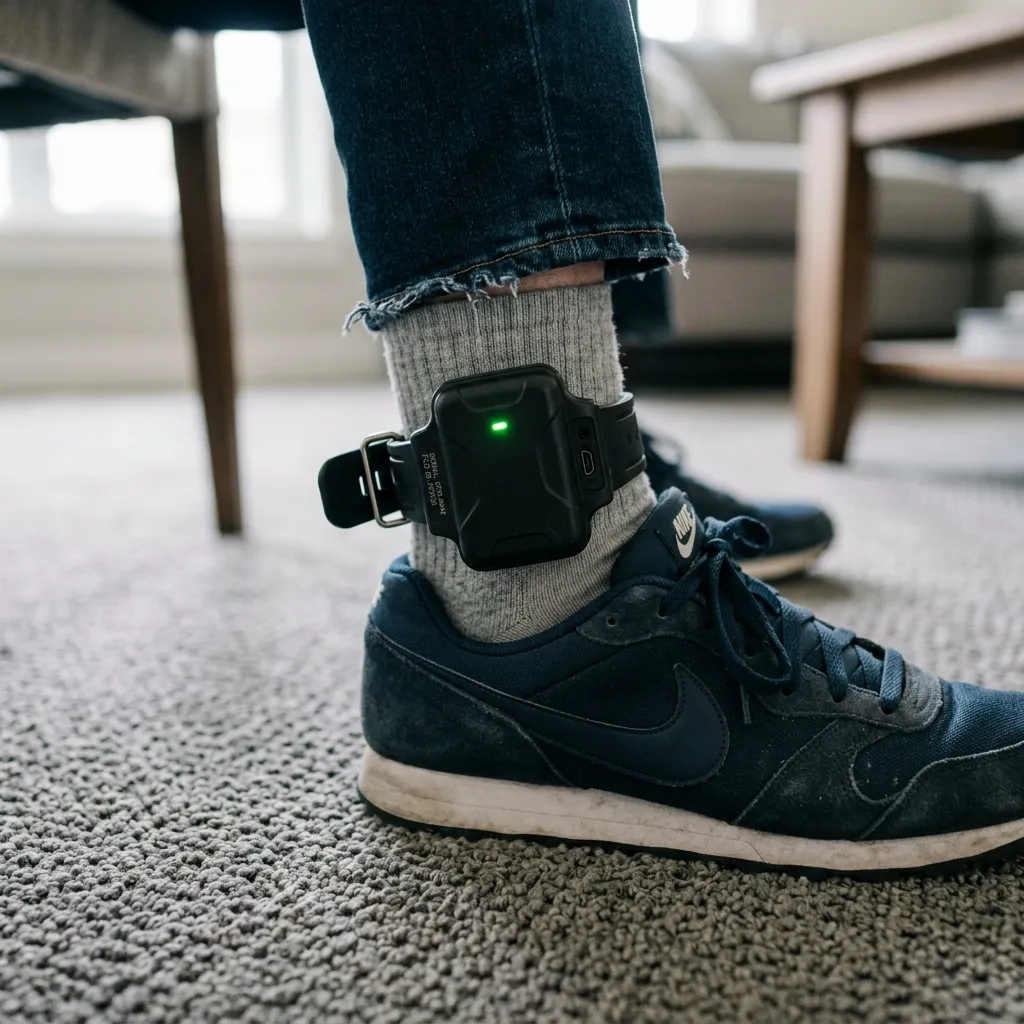
GPS monitoring is the cornerstone of pretrial release conditions in stalking cases. The ankle-mounted GPS device tracks the defendant's location in real time and reports that location to the monitoring company's central server. The system is configured with two types of geographic restrictions: inclusion zones (where the defendant is required to be, such as their home during curfew hours) and exclusion zones (areas the defendant is prohibited from entering).
In a stalking case, the exclusion zones are defined around the victim's known locations. A typical order establishes a 500-foot to 1,000-foot exclusion zone around the victim's home, workplace, school, gym, church, and any other locations the victim regularly frequents. If the GPS device detects the defendant within an exclusion zone, the monitoring company generates an alert that is sent to the pretrial services officer and local law enforcement simultaneously.
The Cost of GPS Monitoring
GPS monitoring is not free. The defendant is responsible for the daily monitoring fee, which ranges from $8 to $15 per day depending on the monitoring company and the county's contract. Over the course of a pretrial period that may last 6 to 12 months, the total cost of GPS monitoring can reach $3,000 to $5,500. This cost is in addition to the bail bond premium, attorney fees, and any other conditions of release that require payment (such as anger management classes or psychological evaluation).
The device must be charged daily, typically by plugging it into a wall charger for 1 to 2 hours. Allowing the device battery to die triggers a "tamper" alert that is treated as a violation. Swimming, showering, and other water exposure is possible with most modern GPS devices, but the defendant should confirm the device's water resistance rating with the monitoring company.
No-Contact Orders in Stalking Cases
The no-contact order in a stalking case is broader and more strictly enforced than in most other criminal cases. A typical no-contact order in a domestic violence case prohibits direct contact with the victim. A no-contact order in a stalking case often prohibits direct contact, indirect contact (through third parties), electronic contact (phone, email, text, social media), physical proximity (within the exclusion zone), and any contact with the victim's family members, coworkers, or associates.
The breadth of the no-contact order creates practical challenges. If the defendant and victim share a workplace, the defendant must find alternative employment. If they share a neighborhood, the defendant must relocate. If they have mutual friends, the defendant must avoid social gatherings where the victim might be present. These restrictions can reshape the defendant's daily life in ways that are difficult to manage over a months-long pretrial period.
What Happens When Conditions are Violated
Violating the conditions of release in a stalking case triggers a rapid and punitive response from the court. The pretrial services officer files a violation report with the court. The court issues a warrant for the defendant's arrest (or the bail bond agent may surrender the defendant preemptively). At the violation hearing, the judge reviews the evidence of the violation and determines whether to revoke the bond.
In stalking cases, bond revocation after a violation is nearly automatic. Judges view no-contact violations in stalking cases as direct confirmation that the defendant is unable or unwilling to control the behavior that led to the charges. Once the bond is revoked, the defendant remains in custody pending trial, and any subsequent motion for bond must overcome the presumption created by the violation. Most judges will deny future bond requests after a stalking-related no-contact violation.
Cyberstalking Complications
Cyberstalking cases present unique challenges for pretrial release conditions because the stalking behavior can be conducted remotely from anywhere with an internet connection. A GPS ankle monitor tracks physical location, but it does not prevent the defendant from using a computer, phone, or tablet to harass the victim online. Courts addressing this gap may impose additional conditions, including requiring the defendant to surrender electronic devices, prohibiting the defendant from using social media platforms, or requiring the defendant to submit to periodic inspection of their devices by pretrial services.
These technology-related conditions are difficult to enforce comprehensively. A defendant who is prohibited from using social media can create accounts under false names. A defendant who surrenders their primary phone can purchase a prepaid phone. The practical limitations of technology-based conditions are a significant factor in some judges' decisions to deny bond entirely in cyberstalking cases where the pattern of online harassment is severe and persistent.
Frequently Asked Questions
Can a stalking charge be reduced to a lesser offense?
Plea negotiations in stalking cases can result in reduced charges, though the reduction depends on the specific facts, the defendant's criminal history, and the victim's position. Aggravated stalking may be reduced to misdemeanor stalking if the credible threat element is weak or if the prior injunction was procedurally deficient. In some cases, a plea to a non-stalking charge such as harassment or trespass after warning is negotiated if the evidence supports an alternative characterization of the behavior. Defense attorneys experienced in stalking cases evaluate the evidence carefully to identify weaknesses in the aggravating elements that may support a charge reduction.
How long does GPS monitoring last during pretrial release?
GPS monitoring continues for the entire pretrial period, from the date of release until the case is resolved through plea, trial, or dismissal. In Florida, the constitutional right to a speedy trial requires that felony cases be brought to trial within 175 days, but defendants who waive speedy trial (which is common while plea negotiations are ongoing) may remain on GPS monitoring for 6 to 18 months. The defense attorney can file a motion to modify or remove the GPS monitoring condition if the circumstances change, but judges are generally reluctant to remove GPS requirements in stalking cases before the case is fully resolved.
Does the victim have input on bail conditions in a stalking case?
The victim has the right to be heard at bail hearings under Florida's victim rights laws (Article I, Section 16 of the Florida Constitution). The prosecution may present the victim's concerns about release conditions, including requests for specific exclusion zones, GPS monitoring, or denial of bail. The victim's advocate from the State Attorney's Office can facilitate communication between the victim and the prosecution regarding appropriate bail conditions. The judge is not bound by the victim's preferences but must consider the victim's safety as a primary factor in the bail determination.
Need Help Posting Bail in Florida?
Connect with a licensed bail bondsman near you. Our directory covers every county in Florida with verified, 24/7 agents ready to help.
Find a Bail Bondsman Now