
Published on:
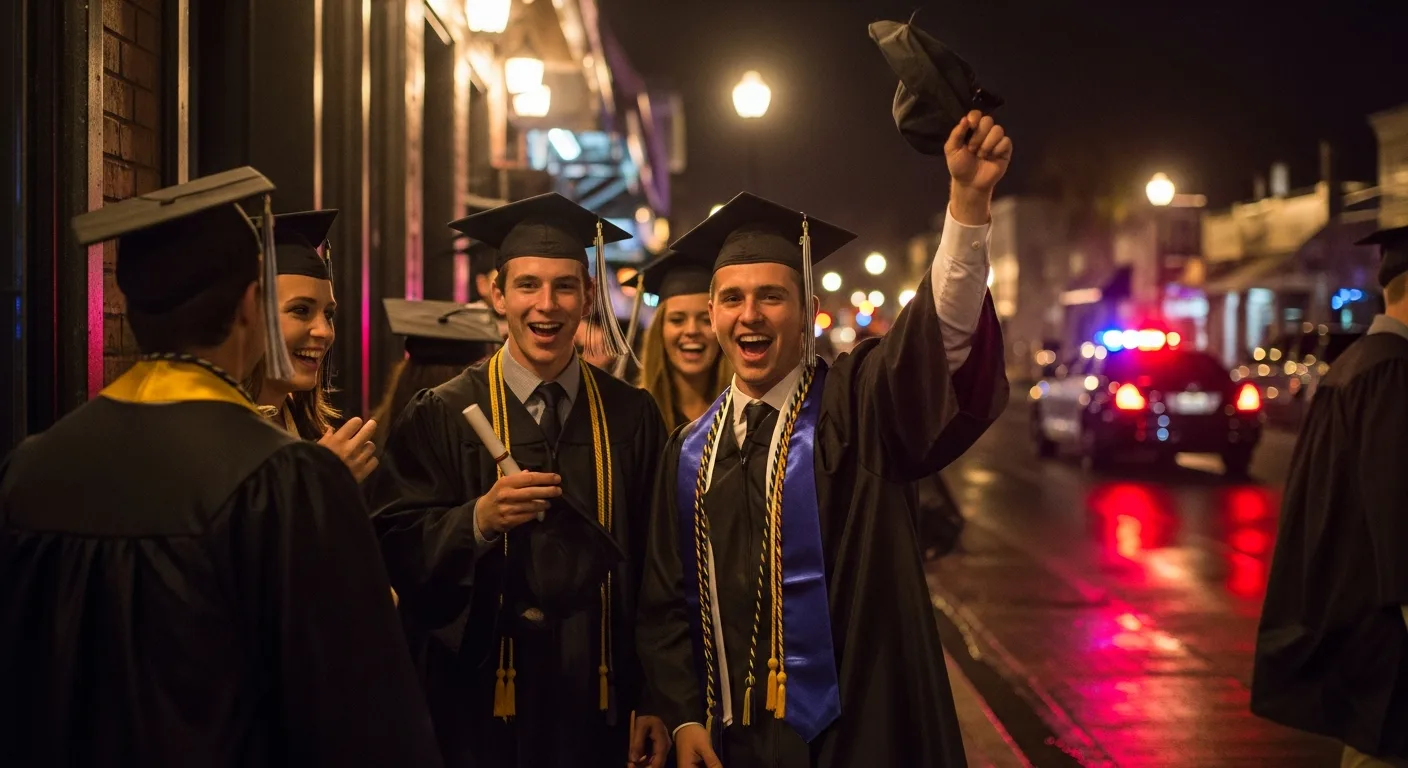
Graduation weekend has a rhythm to it that anyone who has worked bail in a college county knows by heart. The ceremonies end in the afternoon, the family dinners wrap up by nine, and by midnight the bars around campus are shoulder to shoulder with graduates, younger siblings, visiting friends, and a few cousins who came down for the party. The energy is celebratory, the drinking is heavy, and the police presence is doubled. What follows is predictable: a wave of arrests for offenses that are minor in the abstract but life-altering in the moment, because they happen to people who have never been in trouble before.
The students caught up in it are not hardened criminals. They are 19-year-olds with a borrowed ID, 21-year-olds who bought a round for an underage friend, and groups whose loud celebration on a sidewalk got reclassified as disorderly conduct. The arrests are real, the records are real, and the families dealing with them are usually hundreds or thousands of miles from the county jail holding their graduate.
Why Graduation Weekend Spikes
The pattern mirrors what we see during spring break and football game days, but graduation has its own ingredients. Families are in town, so the celebrations spill out of apartments and into public restaurants and bars. There is a sense of finality that pushes people to celebrate harder. And law enforcement in towns like Gainesville, Tallahassee, Orlando, Tampa, Boca Raton, and Miami staffs up specifically because they know the weekend produces volume. More officers on more corners means more contact, and more contact means more arrests for conduct that goes unnoticed on an ordinary Tuesday.
The Charges That Fill the Jail
Possession of Alcohol by a Person Under 21
This is the headline offense of the weekend. Florida law makes it unlawful for anyone under 21 to possess alcoholic beverages, and it is charged as a second-degree misdemeanor. A first offense can carry a fine and a 60-day driver license suspension. Many of these arrests end in a notice to appear rather than a trip to jail, but during high-enforcement weekends officers book more of them, especially when the underage person is intoxicated in public.
Fake ID Offenses
Possessing or displaying a counterfeit identification to buy alcohol is the classic college charge, and it is more serious than students assume. Depending on how the ID was made and whose information it carries, the charge ranges from a misdemeanor to a third-degree felony punishable by up to five years in prison. An ID that uses a real person's license number, or that was manufactured and sold, pushes toward the felony end. A felony fake ID conviction does not disappear when the party ends; it follows the graduate into job applications and background checks.
Disorderly Conduct and Disorderly Intoxication
When a celebration gets loud, blocks a sidewalk, or turns into a shouting match, officers can charge disorderly conduct or disorderly intoxication, both second-degree misdemeanors. These are discretionary charges, which means an officer's read of the situation matters, and during a packed graduation weekend the threshold for intervention drops.
Resisting an Officer Without Violence
A graduate who argues, pulls away, or refuses to comply during an arrest can pick up an additional charge of resisting an officer without violence, a first-degree misdemeanor. This is how a minor underage-drinking stop turns into a two-count booking, and it is entirely avoidable by staying calm and compliant.
The DUI Risk
The most serious common outcome is a DUI. A graduate who drives back to the hotel after the celebration risks a charge that carries mandatory penalties and a far higher bond. We cover the mechanics in our guide to DUI checkpoints and bail; the takeaway for graduation weekend is simple: arrange a ride in advance.
How Bail Works When the Family Is Out of Town
The defining feature of graduation arrests is geography. The graduate is in a Florida county jail, and the parents are in Ohio, New Jersey, or Texas. That distance feels like a barrier, but it is one that bail agents bridge every weekend. You do not have to be in Florida to get your graduate out.
Here is the practical sequence:
- Confirm the charge and the jail. Find out which county facility is holding the graduate and what they were booked on. The charge tells you whether a bond is even necessary or whether they will be released on a notice to appear.
- Determine if there is a bond. Minor underage-drinking arrests often release without a monetary bond. When a bond is set, misdemeanor amounts are typically low. If the graduate picked up a felony fake ID charge or additional counts, the bond rises and they will likely wait for first appearance, held within 24 hours.
- Call a licensed Florida bail agent. The agent takes co-signer information by phone, accepts payment electronically, and posts the bond at the jail. The graduate is released while you coordinate from home.
- Plan around the court date. A misdemeanor arrest carries a future court date in that Florida county. The graduate, now back home, will need to address it, often through a local attorney who can appear on their behalf for minor charges.
Protecting the Future Behind the Diploma
The reason these arrests matter more than the small bond amounts suggest is the record. A graduate about to start a first job, apply to graduate school, or sit for a professional license does not want a fake ID felony or a disorderly conduct conviction surfacing on a background check. Florida offers paths that can soften the long-term damage, including pretrial diversion programs for first-time offenders and, in some cases, sealing or expunging the record after the case resolves favorably. A criminal defense attorney in the arresting county is the person to map that out.
The bond gets the graduate out of jail. The legal strategy that follows is what protects the diploma they just earned. Treat the arrest as a real legal matter from the start, not as a souvenir of a wild weekend, and the long-term cost stays small.
Frequently Asked Questions
Is using a fake ID a felony in Florida?
It can be. Possessing or displaying a fake ID to buy alcohol is often a misdemeanor, but manufacturing, selling, or possessing a counterfeit license, or using an ID tied to a real person's information, can be charged as a third-degree felony punishable by up to five years. Treat any fake ID arrest seriously and consult an attorney.
How much is bail for underage drinking in Florida?
Possession of alcohol by someone under 21 is a second-degree misdemeanor, and many defendants are released on a notice to appear with no bond. When a bond is set, it is usually $250 to $1,000, rising if paired with other charges. A bail agent can post a surety bond for the standard premium so out-of-town families avoid wiring the full amount.
Can you bail someone out of a Florida college town jail from out of state?
Yes. Out-of-state parents do this constantly. You do not need to be in Florida. A licensed Florida bail agent takes the co-signer information by phone, accepts payment electronically, and posts the bond at the jail. Lining up an agent before first appearance is the fastest path to same-day release.
Graduate Arrested This Weekend?
You do not have to be in Florida to get them out. Connect with a licensed bail bondsman who can post the bond and release your graduate today.
Find a Bail Bondsman Now