
Published on:
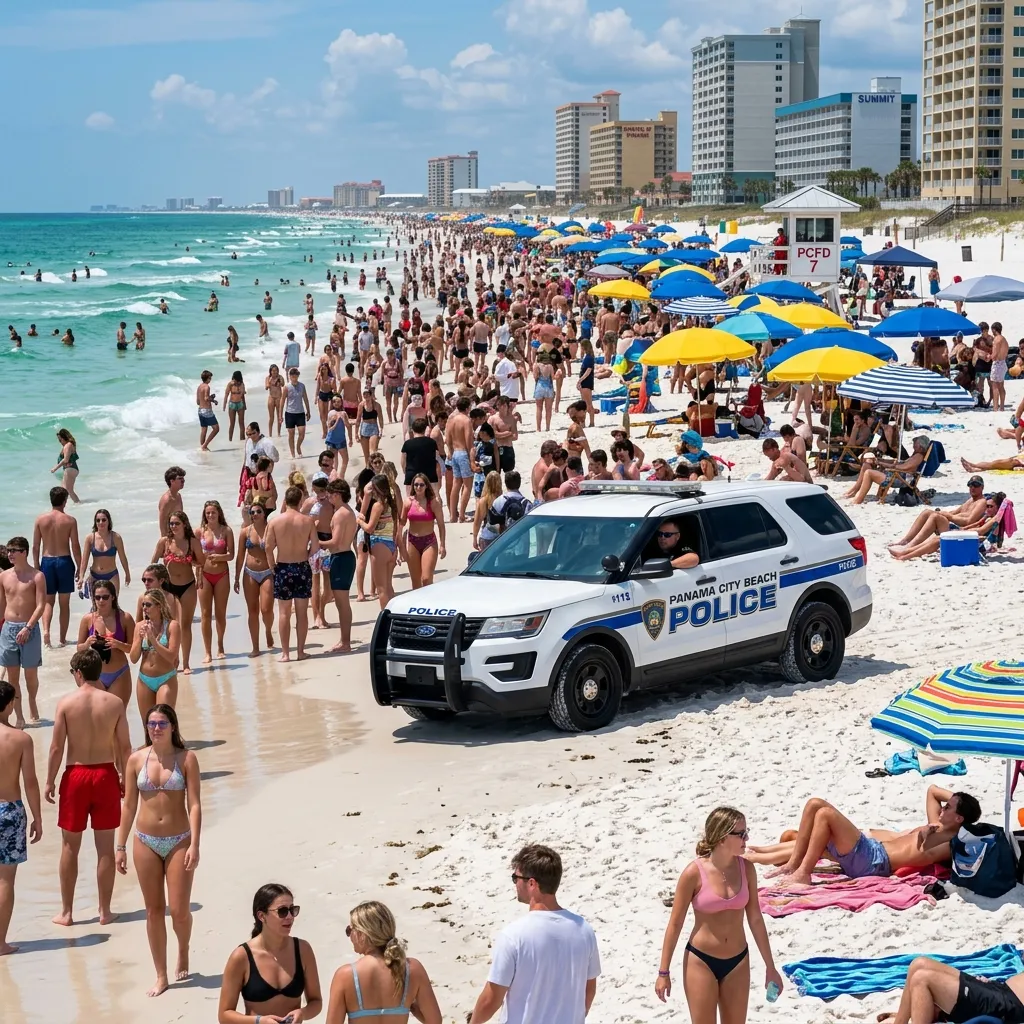
Every March and April, Panama City Beach transforms from a quiet Gulf Coast resort town into one of the most densely populated party destinations in the United States. Hundreds of thousands of college students descend on the strip of hotels and beachfront bars along Front Beach Road and Thomas Drive. The Bay County Sheriff's Office and the Panama City Beach Police Department prepare for this annual surge by dramatically increasing patrol staffing, deploying undercover narcotics units, and stationing DUI checkpoints at key intersections throughout the beach corridor.
For parents, the phone call from a panicked college student sitting inside the Bay County Jail at 3:00 AM is a nightmare scenario. But it is far from uncommon. Understanding the specific charges that drive spring break arrests, the Bay County booking timeline, and the mechanics of posting bond remotely from another state can turn a terrifying situation into a manageable one.
The Most Common Spring Break Charges
The Bay County arrest data during spring break follows a predictable pattern year after year. The overwhelming majority of arrests fall into five categories:
1. Possession of a Controlled Substance
Drug arrests dominate the spring break docket. Undercover officers patrol the beach, hotel pools, and nightclubs specifically looking for marijuana, cocaine, MDMA (ecstasy/molly), and prescription pills being shared or sold. Florida treats possession of even small quantities of many controlled substances as a felony, not a misdemeanor. A student from a state where marijuana is legal can be stunned to learn that possessing a single cannabis edible in Florida constitutes a felony drug charge.
2. Underage Possession of Alcohol
Florida's legal drinking age is 21. Law enforcement actively targets underage drinkers using fake IDs at beachfront bars and liquor stores. Bouncers frequently cooperate with police, flagging suspicious identification for on-site officers. The fake ID itself can generate a separate charge for possession of a fraudulent identification document.
3. Disorderly Conduct and Disorderly Intoxication
Public intoxication on the beach, in hotel parking lots, or along the commercial strip is aggressively enforced during spring break. Florida's disorderly intoxication statute (FS 856.011) specifically targets individuals who endanger the safety of others or cause a public disturbance while intoxicated. Unlike some states, Florida does not have a simple "drunk in public" misdemeanor; the charge carries real consequences.
4. DUI
The Panama City Beach Police deploy DUI checkpoints at strategic locations, particularly along Back Beach Road and the Thomas Drive corridor late at night. First-offense DUI in Florida is a misdemeanor, but it carries mandatory minimum penalties including a license suspension, DUI school, community service, and probation. A DUI arrest during spring break can follow a student for years.
5. Battery and Aggravated Battery
Bar fights, hotel altercations, and beach brawls spike dramatically during the peak spring break weeks. Simple battery (a physical altercation without a weapon) is a first-degree misdemeanor. However, if the fight involves a weapon, a broken bottle, or results in serious bodily injury, the charge escalates to aggravated battery, a second-degree felony carrying a potential 15-year prison sentence and a significantly higher bail amount.
The Bay County Booking Pipeline
All adult arrests in Panama City Beach are processed at the Bay County Jail, located at 5700 Star Lane in Panama City. The standard booking process includes a security screening, medical triage, LiveScan fingerprinting, and an FDLE background sweep. During spring break, every stage of this process is significantly delayed because the intake holding cells are operating at or above capacity.
How Parents Can Post Bond Remotely
Most spring break arrestees are out-of-state residents, meaning their parents are hundreds or thousands of miles away. The bail bond process can be executed entirely remotely:
- Contact a licensed Florida bail bondsman who services Bay County.
- The parent signs the indemnitor (co-signer) agreement electronically.
- The 10% premium is paid via credit card, debit card, or wire transfer.
- The bondsman files the surety bond at the Bay County Jail records window.
- The student is released after the standard discharge protocol.
The entire remote bonding process, from the initial phone call to the bondsman filing paperwork, can be completed in under two hours. The remaining delay is the jail's internal discharge procedure.
Frequently Asked Questions
Will my child have to come back to Florida for court?
Yes. A criminal charge in Bay County requires the defendant to appear at the Bay County Courthouse for all scheduled hearings. Missing a court date triggers a bench warrant and bond forfeiture. Some misdemeanor cases can be handled by a local attorney with a waiver of the defendant's appearance, but felony charges almost always require the defendant to be physically present.
Can the charges be dropped if my child has no prior record?
Potentially. The Fourteenth Judicial Circuit State Attorney's Office does offer pretrial diversion programs for first-time offenders on certain misdemeanor and low-level felony charges. Successful completion of the diversion program results in the charges being dismissed. A private criminal defense attorney should be retained to explore this option.
Should I fly down to Panama City Beach?
It depends on the severity of the charges. For a simple misdemeanor, the bond can be posted remotely and the student can fly home. For a felony arrest, particularly one involving drugs or violence, having a parent physically present to coordinate with the defense attorney and bondsman can be beneficial.
Need Help Posting Bail in Florida?
Connect with a licensed bail bondsman near you. Our directory covers every county in Florida with verified, 24/7 agents ready to help.
Find a Bail Bondsman Now