
Published on:
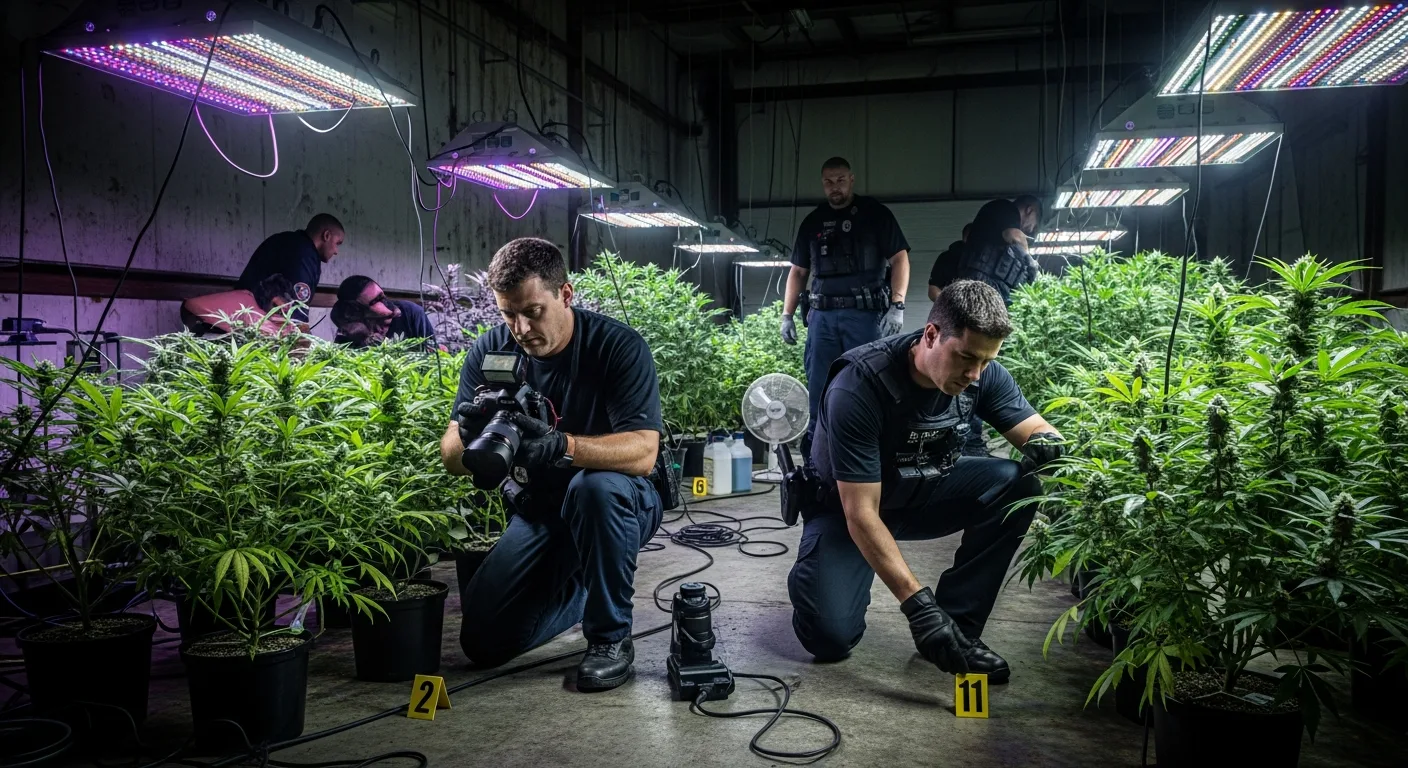
The legalization of medical marijuana created a strange gray zone in people's minds. Dispensaries operate openly, patients carry state-issued cards, and the cultural attitude toward cannabis has softened dramatically. Yet growing your own remains a felony, and a sizable grow can land someone in a trafficking case facing years of mandatory prison. The gap between public perception and legal reality is exactly where people get into trouble.
Marijuana cultivation cases also have a feature most drug charges do not: they can be prosecuted in two entirely different court systems, state and federal, that handle bail in completely different ways. A family that understands the state money-bond system can be blindsided when a case lands in federal court, where there is no bondsman to call. This guide walks through both, starting with how the plant count drives the charge.
Cultivation Is a Felony, Period
Under Florida law, growing marijuana is treated as the manufacture of a controlled substance. Even a single plant is a third-degree felony. This surprises people who assume a small personal grow is equivalent to simple possession. It is not. The act of cultivating is what the statute punishes, and it is charged as a felony from the first plant.
What escalates the case is quantity, and Florida uses plant count and weight as the dividing lines:
- Under 25 plants: cultivation charged as a third-degree felony.
- 25 or more plants: a more serious felony, often charged with intent given the scale.
- 25 pounds or 300 or more plants: the case crosses into marijuana trafficking, which carries mandatory minimum prison terms and substantial fines that increase with the amount.
How State Bail Works in a Cultivation Case
A state marijuana cultivation case uses the familiar Florida bail process. At first appearance, a judge reviews the charge and sets conditions of release. The bail picture tracks the severity:
- Small grows. A third-degree felony cultivation charge often draws a moderate bond, sometimes a few thousand dollars, that a bail agent can post. First-time defendants with community ties may get supervised release.
- Larger grows and trafficking. As the plant count climbs into trafficking range, bonds rise sharply, sometimes into the tens of thousands or higher, reflecting the mandatory penalties at stake.
- Conditions. Judges commonly attach conditions such as no contact with co-defendants, surrender of firearms found at the grow, and travel restrictions.
In state court, a licensed bail bond agent can post a surety bond for the standard premium once the amount is set, getting the defendant out so they can build a defense. The State Attorney may signal at first appearance whether the case is part of a larger investigation, which can affect how the judge views release.
When the Case Goes Federal
Here is the part that catches families off guard. Marijuana is still illegal under federal law, full stop, regardless of Florida's medical program. That means a cultivation operation can be charged in federal court, and certain factors make federal prosecution more likely:
- A large commercial operation, especially one spanning multiple properties
- Evidence the operation crossed state lines or distributed interstate
- Involvement of federal agencies like the DEA in the investigation
- Cultivation on federal land
- Ties to a broader trafficking or organized-crime case
Most small grows stay in state court. But a serious commercial grow can land in the federal system, and that changes the bail process completely.
Federal Bail Is a Different World
The federal release process differs in several key ways:
- The detention hearing. Rather than a quick bond-setting, a federal magistrate holds a hearing to decide release versus detention based on flight risk and danger to the community.
- The presumption of detention. In serious drug cases, federal law can create a rebuttable presumption that the defendant should be detained, putting the burden on the defense to show release is appropriate.
- Conditions instead of premiums. When release is granted, it usually comes with strict conditions, and any bond is often an unsecured promise or secured by property pledged directly to the court, not a premium paid to an agent.
- Pretrial Services supervision. Released federal defendants are supervised by federal Pretrial Services, frequently with electronic monitoring and regular reporting.
For a family, the practical lesson is that a federal marijuana case requires a federal criminal defense attorney immediately, because the detention hearing happens fast and the stakes at that hearing, release or weeks to months in custody, are enormous.
What Families Should Do
- Find out which system has the case. State or federal changes everything about bail. A booking into a county jail suggests state; a federal hold or an appearance before a U.S. magistrate signals federal.
- For a state case, line up a bail agent. Once the judge sets the amount, a surety bond gets the defendant out the same day.
- For a federal case, hire a federal defense attorney at once. The detention hearing is the critical moment, and there is no bondsman to fall back on.
- Preserve evidence about plant count. Because the count drives the charge, documentation about the number, maturity, and weight of plants matters from day one.
- Say nothing about the operation. Statements about scale, distribution, or co-participants can elevate a state case toward trafficking or attract federal interest.
Frequently Asked Questions
How many marijuana plants is a felony in Florida?
Any amount. Growing marijuana is manufacture of a controlled substance, a third-degree felony regardless of plant count. At 25 or more plants it becomes a more serious felony, and at 25 pounds or 300 or more plants it crosses into trafficking with mandatory minimum prison terms. The plant count is the decisive fact in the case.
When does a marijuana grow become a federal case?
Marijuana is illegal under federal law regardless of Florida's medical program. A grow can be charged federally when federal agencies are involved, the operation is large or crosses state lines, it occurs on federal land, or it ties to a broader trafficking investigation. Most small grows stay in state court; large commercial operations attract federal attention.
How does bail work in a federal marijuana case?
Federal court does not use commercial bail bonds. Instead of posting a surety bond through a bondsman, the defendant has a detention hearing before a magistrate who decides release versus detention. Serious drug cases can carry a presumption of detention. Release comes with strict conditions and sometimes a property-secured bond, not a premium to a bail agent.
Facing a State Cultivation Bond?
For a Florida state charge, a licensed bail bondsman can post the bond and get your loved one home today. Connect with an agent now.
Find a Bail Bondsman Now