
Published on:
The call came at 11:47 PM on a Tuesday in September. The wife answered. Her husband, a 38-year-old electrician and the family's sole income earner, had been pulled over on State Road 60 in Hillsborough County after drifting across the center line. He blew a 0.11 on the breathalyzer. He was on his way home from a company dinner where he had three beers over two hours and misjudged his tolerance. No accident. No injuries. No prior criminal record. But he was in handcuffs in the back of a patrol car, and the family's financial stability was about to fracture.
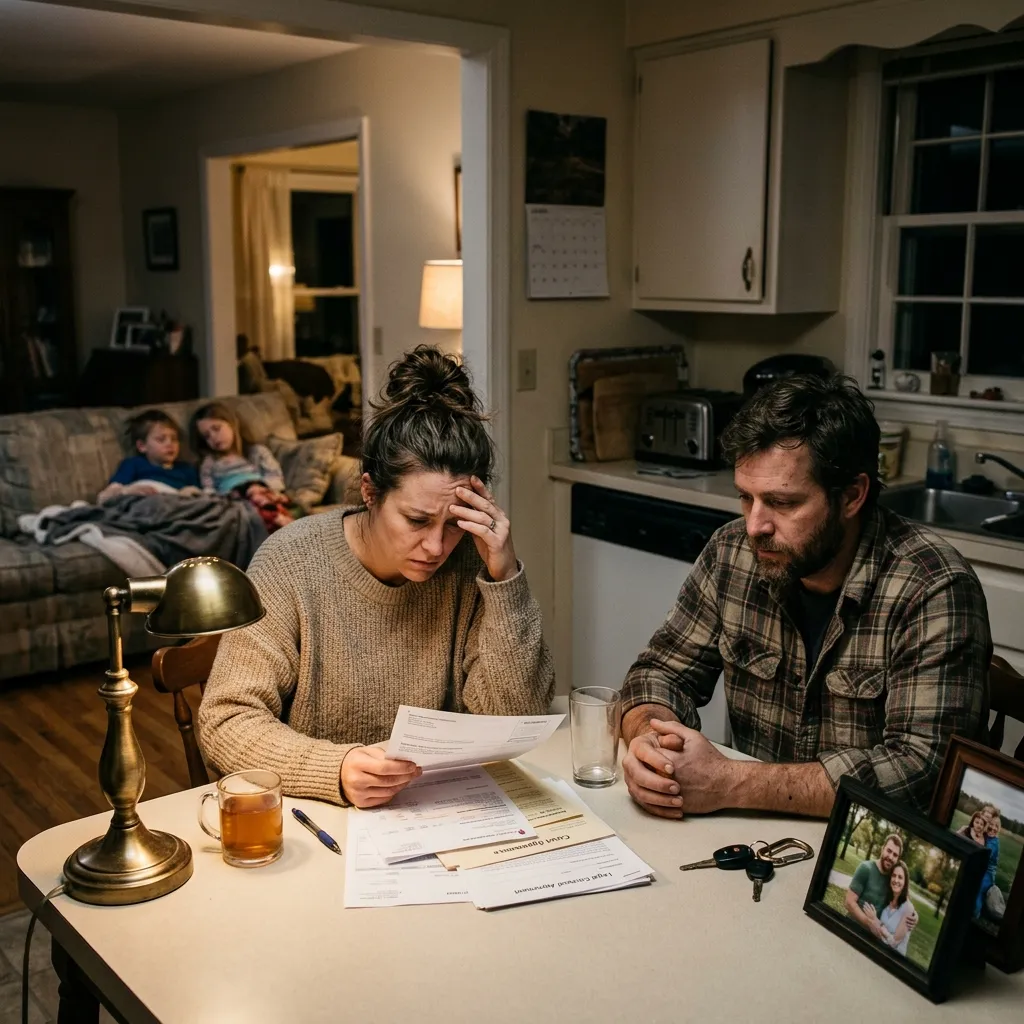
This case study examines what happened over the next six months: the bail process, the employment consequences, the legal costs, the license suspension, and the financial triage that a family of four had to perform to survive the fallout of a single mistake on a Tuesday night.
The Arrest and Booking: Tuesday Night
- 10:55 PM: Traffic stop on SR 60 in Brandon, FL
- 11:15 PM: Field sobriety exercises administered
- 11:30 PM: Breathalyzer administered at scene. Result: 0.11 BAC
- 11:47 PM: Arrested and transported to Orient Road Jail
- 12:20 AM: Arrived at jail, entered booking queue
- 4:45 AM: Booking complete, placed in holding
- 7:00 AM: Wife contacts bail bond agent
- 8:30 AM: Bond posted ($500 bond, $50 premium)
- 12:15 PM: Released from Orient Road Jail
The husband was transported to Orient Road Jail in Hillsborough County, where he entered the standard booking process. A Tuesday night in September is not a peak period at Orient Road, but the facility still processes 100 to 150 bookings per day. His booking took approximately four hours: fingerprinting, background check, medical screening, property inventory, and housing assignment.
The wife did not call a bail bond agent immediately because she did not know how. She had never dealt with the criminal justice system before. She spent the first two hours after the phone call on Google, reading about DUI bail, trying to figure out what "bond" meant, and calling the jail repeatedly to confirm her husband was actually there. The automated inmate lookup system did not show him for nearly three hours because booking was not yet complete.
The Bail Process
First-offense DUI in Hillsborough County carries a preset bond of $500 on the standard bond schedule. This meant the husband did not need to wait for a First Appearance hearing. As soon as booking was complete and his name appeared in the system, a bail bond agent could post the bond.
The wife called a bail bond agent at 7:00 AM Wednesday morning. The agent explained the process: the premium was $50 (10% of the $500 bond), payable by credit card over the phone. The agent also needed the wife to sign an indemnity agreement as the co-signer. Because the premium was only $50, the agent did not require collateral. The entire transaction took 30 minutes.
The bond was posted at 8:30 AM. Release processing at Orient Road took another three and a half hours. The husband walked out of the jail at 12:15 PM Wednesday, roughly 14 hours after the initial traffic stop. He had missed a full night's sleep and an entire workday.
The Employment Crisis
The husband worked as a licensed journeyman electrician for a mid-sized electrical contractor in the Tampa Bay area. He drove a company truck to job sites. His work required a valid Florida driver's license. Here is what happened to his employment over the next 30 days.
Wednesday (Day 1): He called his supervisor from the jail parking lot and explained what happened. His supervisor was sympathetic but told him he needed to talk to HR. Company policy required disclosure of any arrest within 24 hours.
Thursday (Day 2): HR informed him that the company's insurance carrier would not cover him to drive a company vehicle while a DUI charge was pending. He was reassigned to a job site within bicycle distance of his home, which reduced his hours from 50 per week to 32 because there was only one project within non-driving range.
Week 2: The Florida Department of Highway Safety and Motor Vehicles (FLHSMV) administratively suspended his driver's license for six months because he blew over 0.08. He applied for a hardship license within the 10-day window, which allowed him to drive to work, but the hardship license had restrictions that prevented him from driving the company truck for anything other than commuting. His field work capacity dropped further.
Week 4: The company moved him to a warehouse position at reduced pay: $22 per hour instead of his normal $34 per hour. His weekly take-home dropped from approximately $1,450 to $880. The family's monthly income went from roughly $5,800 to $3,520.
The Financial Cascade
A $2,280 monthly income reduction on a household that was already living paycheck to paycheck created immediate problems. The family had two children, ages 7 and 11, a mortgage payment of $1,400, a car payment of $380, and the normal expenses of a four-person household in the Tampa Bay area.
- Bail bond premium: $50
- Vehicle towing and impound (2 days): $385
- Criminal defense attorney: $3,500
- DUI school (Level I, 12 hours): $295
- Substance abuse evaluation: $175
- Court fines and costs: $750
- License reinstatement fee: $150
- Increased auto insurance (6 months): $1,800
- Rideshare costs during suspension: $640
- Total direct costs: $7,745
The direct costs, while painful, were manageable through a combination of savings, a small loan from a family member, and the attorney's payment plan. The real financial damage came from the income reduction. Over the four months that the husband worked at reduced pay and hours, the family lost approximately $9,120 in income compared to what he would have earned at his normal rate and schedule. Combined with the direct costs, the total financial impact of the DUI exceeded $16,000 in the first six months.
The Legal Resolution
The defense attorney negotiated a standard first-offense DUI resolution. Because the husband had no prior record, cooperated with law enforcement, and blew only slightly above the legal limit, the case was resolved with a guilty plea to DUI under Florida Statute 316.193. The sentence included:
- 12 months of probation
- Completion of DUI school (Level I)
- 50 hours of community service
- $500 fine plus court costs
- Substance abuse evaluation and compliance with any recommended treatment
- Six-month driver's license suspension (with credit for time already served under the administrative suspension)
The resolution was, by Florida standards, favorable. No jail time beyond the initial arrest. No ignition interlock requirement for a first offense under 0.15 BAC. Standard probation terms. But "favorable" is a relative term when you have already lost $16,000 and counting.
The Recovery Period
The husband's full license was restored approximately six months after the arrest. He returned to his normal position, driving the company truck and working full hours at his regular pay rate. The company did not terminate him, which was the single most important factor in the family's financial survival. If he had lost the job entirely, the family's situation would have deteriorated dramatically.
The increased auto insurance premiums continued for three years after the conviction, adding an estimated $3,600 to $5,400 in total additional insurance costs over that period. The DUI conviction remains on his criminal record permanently in Florida, and it appears on background checks that any future employer might run.
What This Case Study Illustrates
This was a best-case scenario. First offense. No accident. No injuries. No property damage. Cooperative defendant. Experienced attorney. Supportive employer. And it still cost the family over $16,000 in six months and fundamentally disrupted their financial stability for the better part of a year.
The lesson is not a moral one. The lesson is practical. When the primary breadwinner of a household is arrested for any offense that affects their ability to work, the financial consequences cascade beyond the courtroom. The bail premium was $50. The real cost was the months of reduced income, the legal fees, the insurance increases, and the stress on a family that was already stretched thin.
Advice for Families in This Situation
Get the Breadwinner Out of Jail as Fast as Possible
Every hour in jail is an hour of missed work. Call a licensed bail bond agent immediately. Do not wait until morning hoping the situation will resolve itself. A first-offense DUI bond is typically $500 to $1,000, which means the premium is $50 to $100. That is a small price compared to the cost of a missed workday.
Notify the Employer Before They Find Out Another Way
Employers who learn about an arrest from the employee directly are more likely to work with the employee than employers who discover it through a background check update or a coworker's gossip. Transparency is not guaranteed to save the job, but concealment is almost guaranteed to make the situation worse.
Apply for a Hardship License Immediately
Florida allows defendants to apply for a hardship license within 10 days of the administrative license suspension. The hardship license permits driving for business purposes, which is the lifeline that keeps the income flowing. Missing the 10-day window does not eliminate the option, but it complicates the timeline.
Hire an Attorney, Even for a First Offense
A private attorney with DUI experience can often negotiate better outcomes than a public defender can achieve on a high-volume DUI docket. The $2,500 to $5,000 attorney fee is significant, but the reduction in fines, community service hours, and probation conditions often justifies the cost. Payment plans are available from most criminal defense attorneys.
Frequently Asked Questions
Does the employer have to fire someone arrested for DUI?
No. Florida employers are not required to terminate employees who are arrested for DUI. However, employers whose insurance policies exclude coverage for employees with pending DUI charges may be forced to reassign the employee to non-driving duties. CDL holders face the strictest consequences because federal regulations disqualify commercial drivers with DUI convictions, but non-commercial employees generally have more flexibility.
Can you get a hardship license before the DUI case is resolved?
Yes. The hardship license addresses the administrative suspension imposed by FLHSMV, which is separate from the criminal case. You do not need to wait for the criminal case to conclude before applying. Enroll in DUI school and request a formal or informal review hearing with FLHSMV within 10 days of the suspension notice to begin the hardship license process.
Will a first DUI show up on a background check years later?
Yes. DUI convictions in Florida are not eligible for record expungement or sealing. The conviction remains on the defendant's criminal record permanently and will appear on any background check that includes criminal history. This can affect future employment, professional licensing applications, and housing applications for years after the case is resolved.
Need Help Posting Bail in Florida?
Connect with a licensed bail bondsman near you. Our directory covers every county in Florida with verified, 24/7 agents ready to help.
Find a Bail Bondsman Now