
Published on:
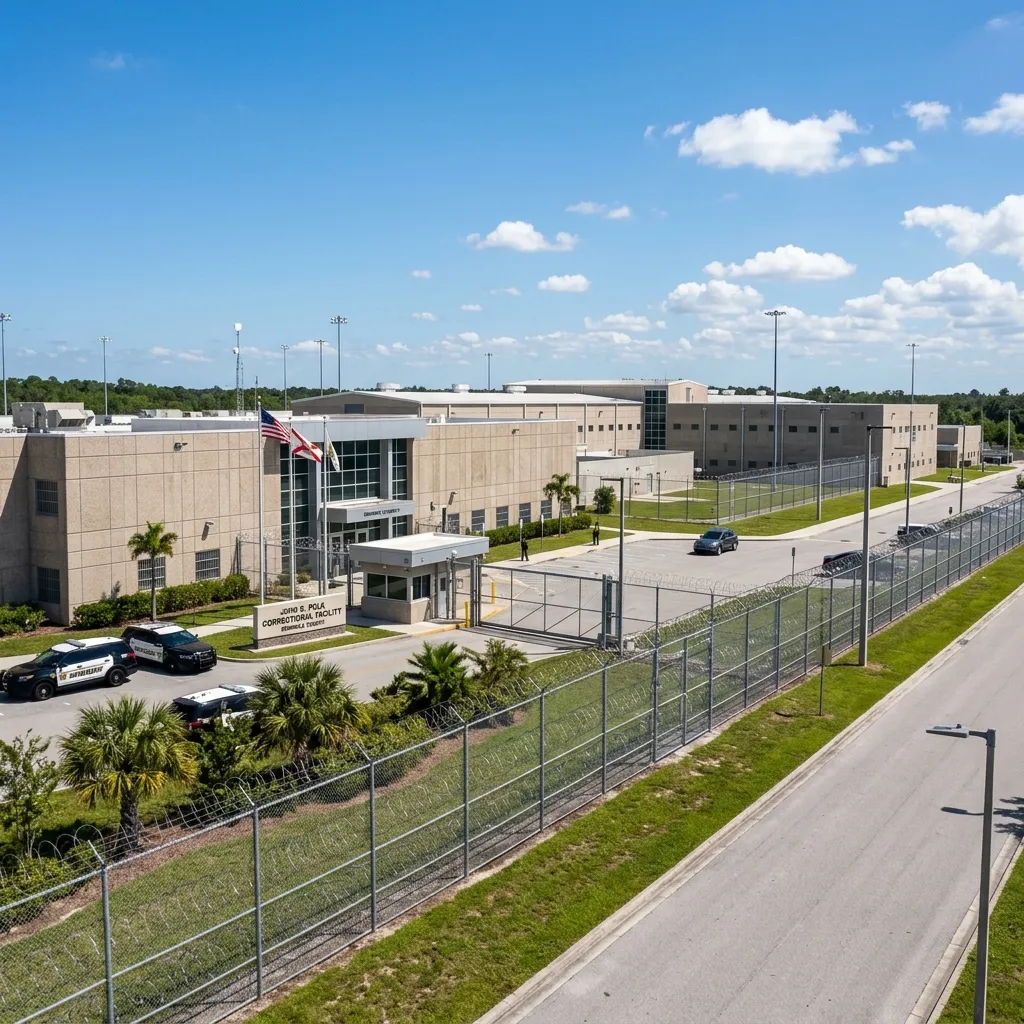
Seminole County occupies a strategic position in the heart of the Orlando metropolitan area, encompassing the rapidly growing cities of Sanford, Altamonte Springs, Casselberry, and Lake Mary. Its proximity to both Orlando and the I-4 corridor generates a steady stream of arrests driven by urban density and high traffic volume. Whether the arrest is conducted by the Sanford Police Department, the Altamonte Springs Police, or the Seminole County Sheriff's Office (SCSO), every adult taken into custody is transported to the same facility: the John E. Polk Correctional Facility.
Located at 211 Bush Blvd in Sanford, this modern detention center sits directly adjacent to the Seminole County Courthouse complex. This adjacency is a significant procedural advantage for families: it means judicial reviews happen quickly and efficiently, often faster than in counties where the jail and courthouse are separated by miles. However, the booking process itself is rigorous and multi-staged, and families must understand each step to avoid panic and unnecessary delays.
The Custody Transfer at Bush Blvd
When the arresting officer's vehicle enters the secure sally port on Bush Blvd, physical custody of the detainee is formally transferred to the SCSO detention personnel. The immediate focus for the intake staff is maintaining the absolute security of the correctional facility.
Every incoming individual undergoes a thorough physical search, including a metal detector scan, designed to intercept weapons, illicit drugs, or contraband before they enter the secure perimeter. All personal property is confiscated, meticulously cataloged on a standardized inventory sheet, and stored in the facility's secured property vault. Items like prescription eyeglasses, medical devices, and religious materials are flagged for special handling. The detainee is then placed in a designated intake holding area. No telephone access is permitted during this initial phase.
Medical Screening and Mental Health Assessment
The Seminole County Sheriff's Office enforces a strict medical clearance policy before any administrative booking data is recorded. A contracted healthcare team evaluates every incoming individual for physical and psychological fitness for incarceration.
The assessment covers acute intoxication, narcotic withdrawal, physical injuries from the arrest, and psychiatric instability. Seminole County's position within the greater Orlando metro area means the medical team regularly processes individuals presenting with complex substance abuse profiles involving multiple drugs. If the healthcare professionals determine the individual is experiencing a medical emergency, the booking is rejected and the arresting agency must transport them to Central Florida Regional Hospital in Sanford or AdventHealth Altamonte Springs. This medical diversion typically adds eight to twelve hours before the individual can be returned for formal processing.
Fingerprinting and Background Verification
Once the medical clearance is achieved, the individual advances to the identification station. Detention staff capture the official booking photograph and digitally scan the detainee's fingerprints using a LiveScan terminal. This biometric data is transmitted instantaneously to the Florida Department of Law Enforcement (FDLE) and the FBI's national criminal database.
The automated sweep confirms the detainee's true legal identity and searches for outstanding warrants, probation violations, and immigration detainers across all fifty states. Seminole County's position in the Orlando metro frequently results in cross-jurisdictional hits from neighboring Orange, Osceola, and Volusia counties. Any detected external hold supersedes all local bail conditions and blocks the bonding process until the other agency resolves its claim.
The Eighteenth Judicial Circuit Bond Schedule
If the background sweep is clean, the booking clerk references the specific charges on the probable cause affidavit against the Eighteenth Judicial Circuit's standardized bail schedule. This schedule assigns automatic bond amounts for common non-violent offenses, including retail theft, trespass, simple battery, and first-offense DUI.
When Judicial Review is Required
Violent felonies, domestic battery, drug trafficking, sexual offenses, and probation violations are excluded from the automatic schedule. These individuals receive a No Bond classification and must wait for a judge to set conditions.
In Seminole County, First Appearance hearings are held daily at the adjacent courthouse, typically in the morning. The presiding Eighteenth Circuit judge reviews the probable cause affidavit, listens to arguments from the State Attorney and defense counsel, and establishes bail conditions. The courthouse's proximity to the jail means attorneys can physically attend these hearings with minimal travel, making it easier to retain a private defense attorney to argue for a reduced bond or a Release on Recognizance (ROR).
Posting a Surety Bond
Once a monetary bail figure is established, the family must satisfy the financial obligation. The Seminole County Clerk of Court accepts the full cash bail amount directly, but this requires tying up substantial personal funds for the duration of the criminal case, which can stretch for many months.
The standard alternative is to retain a licensed surety agent. A professional bondsman charges a state-mandated, non-refundable 10% premium. On a $15,000 bond, the family pays the bondsman $1,500. The bondsman posts a legally binding surety bond with the court, assuming all financial liability if the defendant fails to appear for scheduled hearings at the Seminole County Courthouse.
Release Processing
Filing the bond paperwork triggers the release protocol, but the individual does not exit immediately. Detention staff must conduct a final background check, verify no new warrants appeared during custody, and retrieve all stored personal property from the vault. This final administrative sequence typically takes two to four hours, benefiting from the facility's relatively efficient administrative infrastructure. The individual is released through the public lobby on Bush Blvd.
Frequently Asked Questions
Is the John E. Polk Correctional Facility the same as the Seminole County Jail?
Yes. The John E. Polk Correctional Facility is the official name for what most people casually refer to as the "Seminole County Jail." It is the sole adult detention center in the county, handling all intake, housing, and release operations.
Can I visit someone who was just arrested in Sanford?
No. Individuals undergoing active intake and classification are not eligible for any form of visitation. Once fully classified and assigned to a housing unit, remote video visits can be scheduled through the county's approved vendor. Traditional in-person visitation is not available.
Does the courthouse proximity actually help?
Yes. Because the courthouse is adjacent to the jail, First Appearance hearings happen reliably on schedule, private attorneys have easy physical access, and bond paperwork moves between the Clerk's office and the jail records window faster than in counties where these facilities are miles apart.
What happens if the defendant misses a court date?
The Eighteenth Circuit judge will immediately issue a bench warrant, the surety bond will be forfeited, and the bondsman will deploy recovery agents. A separate "Failure to Appear" charge will be filed by the State Attorney's Office, compounding the defendant's legal exposure.
Need Help Posting Bail in Florida?
Connect with a licensed bail bondsman near you. Our directory covers every county in Florida with verified, 24/7 agents ready to help.
Find a Bail Bondsman Now