
Published on:
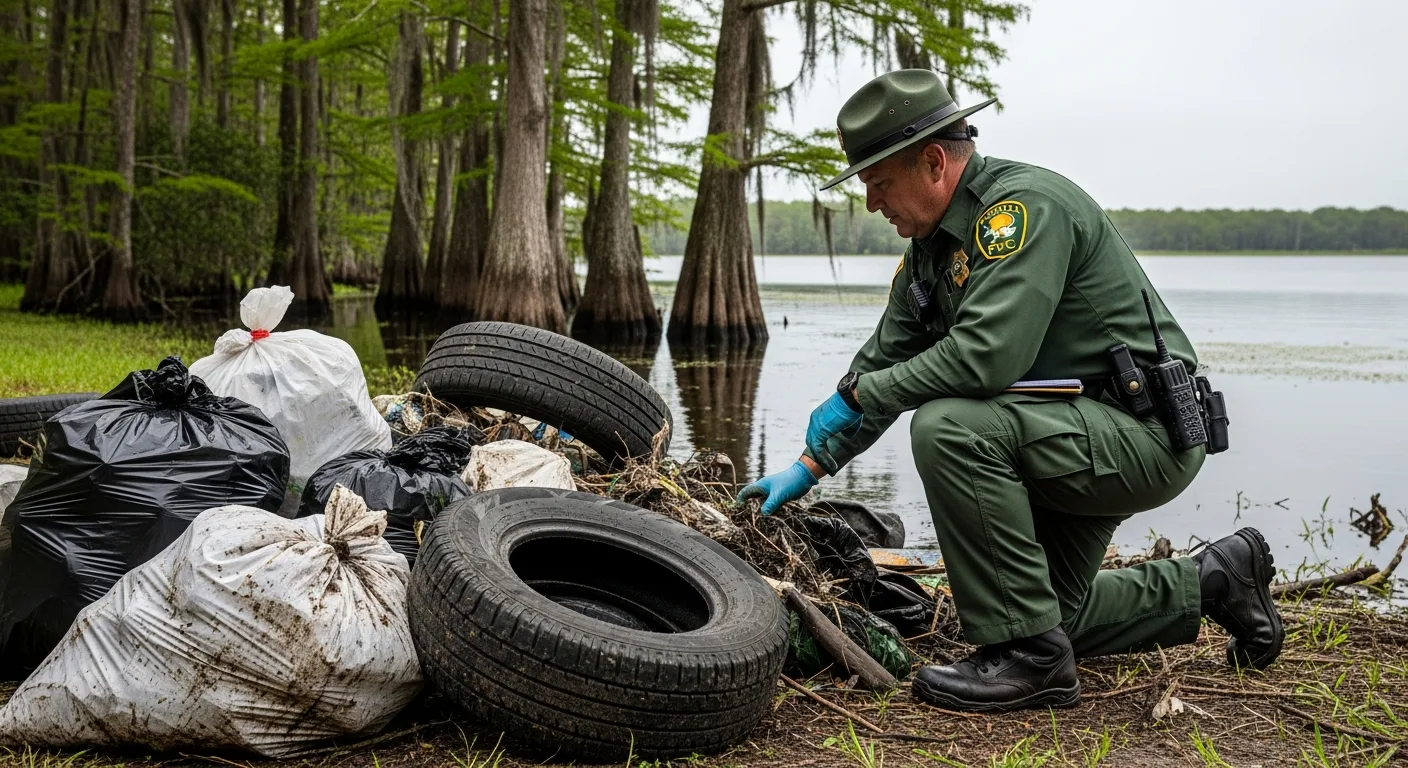
Most people do not think of environmental violations as the kind of thing that lands you in a county jail. They picture a ticket, a fine, a stern warning. Florida often sees it differently. With its vast wetlands, protected species, and a tourism economy built on natural beauty, the state has built serious enforcement around illegal dumping and poaching, and it has given wildlife officers the authority to arrest. A contractor saving money by dumping debris in a remote lot, or a hunter taking an animal out of season, can find that what felt like a small shortcut is being treated as a crime with a real bond.
This guide covers two of the most common environmental crimes in Florida, illegal dumping and poaching, explaining how they are charged, why some rise to felonies, who enforces them, how bail works, and the additional financial penalties that come with them. It rounds out the kind of unusual charge-specific situations we cover alongside cases like animal cruelty.
Illegal Dumping
Florida law treats the improper disposal of waste on a sliding scale based on how much and what kind of material is involved.
Minor Litter
Dumping a small amount of litter is often a noncriminal infraction or a low-level misdemeanor handled with a citation and a fine. This is the tossed bag or the small pile, treated as a nuisance offense.
Felony Dumping
The case escalates sharply with quantity and hazard. Dumping larger amounts of waste, commercial quantities of debris, or hazardous materials can be charged as a third-degree felony. A contractor disposing of construction debris, a business dumping waste to avoid disposal fees, or anyone improperly handling hazardous material faces this more serious exposure. The commercial nature of the dumping is a major aggravating factor, because the law targets those who profit by externalizing their disposal costs onto the public and the environment.
Poaching and Wildlife Crimes
Poaching, the illegal taking of fish or wildlife, is enforced by the Florida Fish and Wildlife Conservation Commission, known as the FWC. Its officers are fully sworn law enforcement with the power to stop, cite, and arrest. Wildlife violations cover an enormous range:
- Misdemeanor-level violations, such as taking undersized fish, exceeding bag limits, or hunting or fishing without a license, are common and usually handled with citations.
- Serious offenses, including taking protected or endangered species, illegally taking alligators, hunting from a vehicle at night using a light, or trespassing to hunt, can rise to felonies.
- Commercial poaching, the large-scale illegal harvest of wildlife for sale, draws the most serious charges and the highest penalties.
The FWC treats wildlife crime as a genuine law enforcement priority, not a paperwork matter, and a serious poaching case can end in an arrest and a trip to booking.
How These Cases Get Made
Environmental crimes are often investigated more carefully than people assume, which is why defendants are frequently surprised to be caught. Illegal dump sites are increasingly monitored with hidden trail cameras placed by local code enforcement and sheriffs, and dumped material is searched for anything bearing a name or address, a receipt, an envelope, or a shipping label, that ties the waste back to a person. Poaching cases are built by FWC officers who patrol on land and water, run undercover operations, follow up on tips from the public, and use the detailed records that hunting and fishing license systems generate. The result is that what feels like an anonymous act on an empty back road or a quiet stretch of water often leaves a trail, and the case that follows can be well documented by the time of the arrest.
How Bail Works in These Cases
The bail picture tracks the level of the offense. For the many misdemeanor environmental violations, there is frequently no bond at all, with release on a citation or a notice to appear. For felony illegal dumping or serious poaching, a bond is set, and at first appearance the judge weighs the severity, the commercial scale, and any prior record. These felony bonds are commonly in the low thousands of dollars. A licensed bail bond agent can post a surety bond for the standard premium once the amount is set, the same process used for any felony bond.
The Equipment and License Consequences
Environmental crimes carry consequences that reach into a person's livelihood and hobbies in ways other charges do not. A poaching conviction can mean suspension or permanent revocation of hunting and fishing licenses, which matters enormously to people whose recreation or work depends on them. The forfeiture of vehicles, boats, firearms, and gear used in the offense is common, and for a commercial operator, illegal dumping charges can threaten business licenses and contracts. These collateral consequences are often what make an environmental case genuinely damaging, well beyond the criminal penalty itself.
What Families Should Do
- Determine the charge level. A misdemeanor citation is very different from a felony, so find out exactly what the person was charged with and whether a bond is required.
- Arrange bail for a felony charge. A licensed bail agent can post the bond quickly once it is set so the defendant is released.
- Hire a defense attorney familiar with environmental and FWC cases. These cases have technical elements about quantity, species, and licensing, and specialized defense helps.
- Plan for fines, restitution, and forfeiture. The financial exposure beyond bail, cleanup costs, wildlife replacement value, and lost equipment, can be the biggest consequence.
- Preserve evidence and say little. Documentation about what was actually dumped or taken can matter, and statements to officers can supply the elements the state needs.
Frequently Asked Questions
Is illegal dumping a felony in Florida?
It can be. Florida grades dumping by amount and type. Small litter is often a misdemeanor or infraction, but larger amounts, commercial quantities, or hazardous materials can be charged as a third-degree felony. The charge rises with quantity, hazard, and whether it was a commercial operation, so a contractor dumping construction debris faces a far more serious case than someone who tossed a single bag.
What happens if you get caught poaching in Florida?
Poaching is enforced by the FWC, and consequences range from citations to criminal charges. Many violations like undersized fish or exceeding bag limits are misdemeanors, but taking protected species, hunting from a vehicle at night with a light, or commercial poaching can be felonies. Penalties include fines, license revocation, forfeiture of equipment and vehicles, and possibly jail. An arrest can come with a bond.
How much is bail for an environmental crime in Florida?
Most misdemeanor violations carry no bond or a low one, with release on a citation. Felony dumping or serious poaching carries higher bonds, typically in the low thousands depending on severity, commercial scale, and record. On top of bail, these cases often carry large fines and restitution, including cleanup costs or wildlife replacement value. A licensed agent can post a surety bond for the standard premium once set.
Arrested on an Environmental Charge?
Whether it is a dumping felony or a serious poaching case, a licensed bail bondsman can post the bond and get your loved one home. Connect with one now.
Find a Bail Bondsman Now