
Published on:
Note: All names and identifying details have been changed. The procedural elements reflect real-world ICE detainer processes in the Florida criminal justice system.
The Arrest
State Charge: DUI (first offense), Florida Statute 316.193
Federal Hold: ICE Immigration Detainer (Form I-247A)
Arresting Agency: Collier County Sheriff's Office
Carlos was pulled over on Immokalee Road in Collier County after a deputy observed his vehicle drifting between lanes. A field sobriety test and breathalyzer indicated a blood alcohol concentration of 0.11%, above the legal limit of 0.08%. Carlos was arrested for DUI and transported to the Collier County Jail for booking.
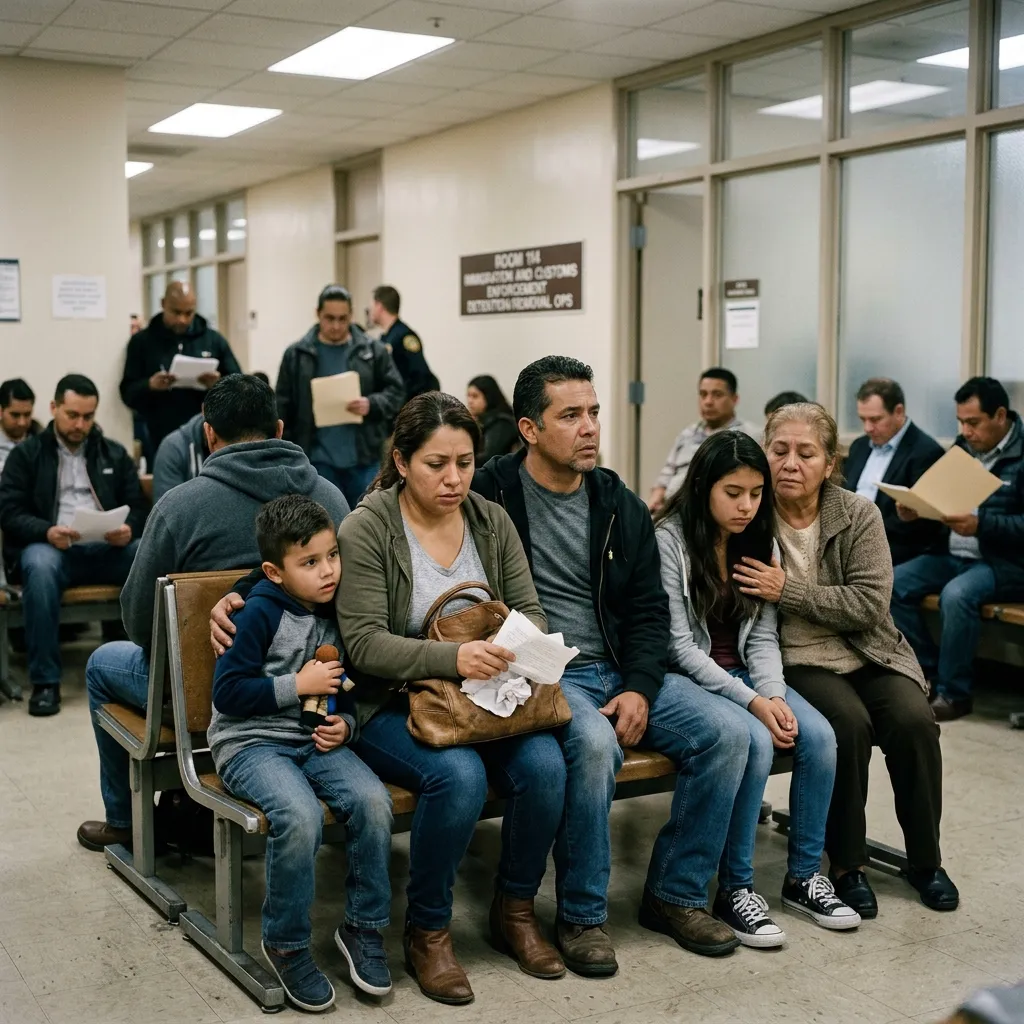
During the booking process, when the jail's records clerk ran Carlos's fingerprints through the federal database, a flag was returned from U.S. Immigration and Customs Enforcement. ICE issued a detainer request (Form I-247A) to the Collier County Jail, asking the facility to hold Carlos for up to 48 hours beyond his normal release date so that ICE agents could take custody for immigration proceedings.
The Dual-System Problem
Carlos's family now faced two entirely separate legal proceedings operating under different rules:
The State Criminal Case
The DUI charge was a standard first-offense misdemeanor in the Twentieth Judicial Circuit. The automatic bond was $1,000. Under normal circumstances, Carlos would have bonded out within hours.
The Federal Immigration Hold
The ICE detainer was not a criminal charge; it was a civil immigration enforcement action. There is no "bail" for an ICE detainer in the traditional sense. The detainer simply requests that the jail hold the individual for ICE pickup. The detainer operates independently of the state case and cannot be bonded out through the state bail system.
The Attorney Strategy
Carlos's wife retained two attorneys: a criminal defense attorney for the DUI charge and an immigration attorney to address the ICE detainer. The two attorneys coordinated their approach.
Step 1: Bond the State Charges Immediately
The criminal defense attorney arranged for a bail bondsman to post the $1,000 DUI bond. The 10% premium was $100. This started the clock on the 48-hour ICE window. Without posting the state bond, there would be no release date, and the 48-hour clock would never begin.
Step 2: Document the ICE Detainer Arrival Time
The immigration attorney immediately contacted the Collier County Jail to confirm the exact time the ICE detainer was received. This timestamp was critical because the 48-hour window begins when the defendant would otherwise be released (i.e., when the state bond is processed and discharge would normally occur), not when the detainer was filed.
Step 3: Prepare for Both Outcomes
The immigration attorney prepared two parallel strategies:
- If ICE takes custody: File for an immigration bond hearing before an immigration judge. Immigration bonds are separate from state bail bonds and typically range from $5,000 to $25,000.
- If ICE does not act within 48 hours: Demand release from the Collier County Jail and immediately begin the process of addressing Carlos's immigration status through affirmative remedies.
The Resolution
ICE agents arrived at the Collier County Jail within the 48-hour window and took Carlos into federal custody. He was transferred to the Krome Service Processing Center in Miami-Dade County, the primary ICE detention facility in South Florida.
The immigration attorney filed for an immigration bond hearing within 48 hours of Carlos's transfer to Krome. At the hearing before an immigration judge, the attorney presented Carlos's 14-year residency in Florida, his employment history, his U.S.-citizen children, his clean criminal record (the DUI was a first offense), and letters of support from his employer and community members. The immigration judge set an immigration bond of $7,500, which the family posted through an immigration bond company.
Carlos was released from Krome on the immigration bond and returned to Collier County to resolve his DUI case, which was ultimately resolved through a plea agreement with the standard first-offense penalties.
Total Cost to the Family
- State DUI bail bond premium: $100
- Criminal defense attorney (DUI): $2,000
- Immigration attorney: $5,000
- Immigration bond: $7,500 (refundable upon case completion)
- DUI fines and court costs: $1,200
- Lost wages (12 days): approximately $2,400
- Total out-of-pocket: approximately $18,200 ($7,500 immigration bond potentially refundable)
Key Takeaways
- Post the state bond immediately. The ICE 48-hour clock does not start until the defendant would otherwise be released.
- Retain both a criminal attorney and an immigration attorney. These are separate legal proceedings with different rules, different courts, and different outcomes.
- Do not discuss immigration status with jail staff. All conversations in the jail are recorded. Do not answer questions about immigration status without an attorney present.
- The ICE detainer is civil, not criminal. It cannot be "bonded out" through the state system, but it can be challenged through the immigration court system.
Frequently Asked Questions
Do all Florida jails honor ICE detainers?
Most Florida county jails cooperate with ICE detainers. Florida law (FS 908.104) requires state and local law enforcement agencies to cooperate with federal immigration authorities. This is different from some states that have "sanctuary" policies limiting cooperation with ICE.
Can ICE place a detainer for any arrest?
ICE can place a detainer on any individual in local custody who ICE has reason to believe is removable from the United States. The severity of the state charge does not determine whether ICE issues a detainer; immigration status does.
What happens to the immigration bond after the case?
If the individual complies with all immigration court appearances and the case is resolved (whether through a grant of relief, voluntary departure, or removal order), the immigration bond is refunded to the obligor. If the individual fails to appear at an immigration hearing, the bond is forfeited.
Need Help Posting Bail in Florida?
Connect with a licensed bail bondsman near you. Our directory covers every county in Florida with verified, 24/7 agents ready to help.
Find a Bail Bondsman Now