
Published on:
The phone calls I dreaded most were the ones where I had to explain that there was nothing I could post. A family would call, ready to bond their loved one out, and I would pull up the case and see those two words that stop a bail agent cold: no bond. Sometimes the judge had set a bond and then revoked it. Sometimes the judge denied bond from the start. Either way, the family was facing a situation where money alone could not open the jail door, and they needed to understand why before they could understand what to do next.
Bond revocation at first appearance is one of the most misunderstood moments in the Florida pretrial process. People assume first appearance is only about a judge deciding how much bail to set. It is also where a judge can decide that release is off the table. This guide explains when and why that happens, what the law allows, and the realistic path back to release.
First Appearance Is Not Only About Setting Bail
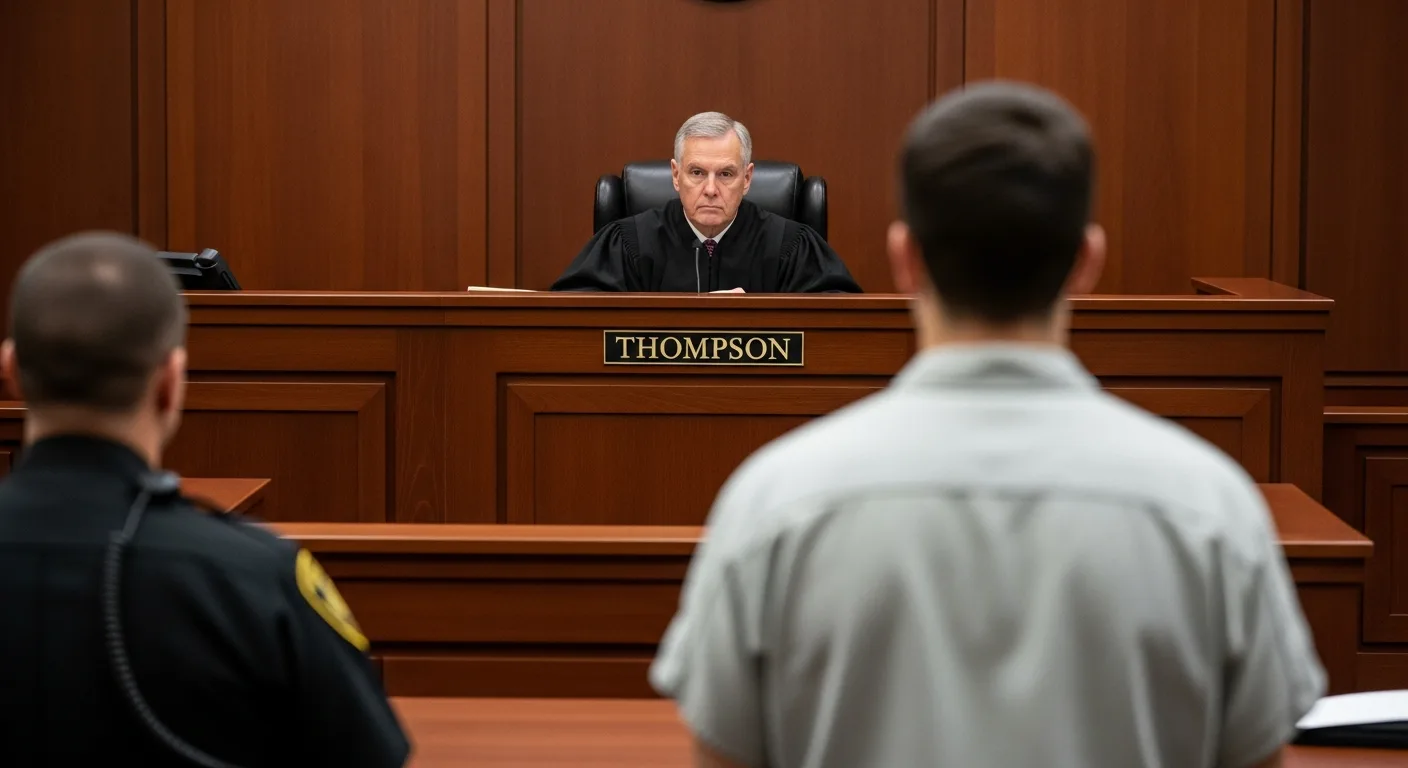
At first appearance, which happens within 24 hours of arrest, the judge reviews the probable cause affidavit, hears from the prosecutor and defense, and reads the pretrial services report. The default outcome is the judge setting conditions of release, including a bond amount. But the same hearing gives the judge the authority to deny bond or to revoke a bond the defendant already had on a different case. For a defendant who was out on release when the new arrest happened, first appearance is where those two cases collide.
The New-Arrest Trigger: Statute 903.0471
The most common reason a bond gets revoked at first appearance is a new arrest while the defendant was already out on release. Florida Statute 903.0471 gives the court the power to revoke pretrial release if it finds probable cause that the defendant committed a new crime while on release for an earlier charge. The mechanics are straightforward and unforgiving:
- The defendant bonds out on Case A.
- While the case is pending and the defendant is on release, they are arrested for a new offense, Case B.
- At the first appearance on Case B, the judge sees the defendant was on release and finds probable cause for the new crime.
- The judge revokes the bond on Case A, and the defendant is now held with no bond on the original case, regardless of what bond is set on the new one.
Other Reasons a Judge Denies or Revokes Bond
The new-arrest trigger is the most frequent, but it is not the only path to a no-bond status at first appearance.
Violation of Probation
A defendant arrested on a violation of probation frequently faces a no-bond hold. VOP cases are treated as a breach of trust the defendant already received, and many judges will not set a bond until a hearing on the violation.
Non-Bondable Charges
Florida's constitution makes certain offenses non-bondable when the proof of guilt is evident or the presumption great, including capital crimes and offenses punishable by life. For these charges, the path to release runs through an Arthur hearing, where the state must demonstrate that high level of proof before the no-bond hold can stand.
Danger to the Community or Flight Risk
A judge can deny bond after finding that no condition of release would reasonably protect the community or assure the defendant's appearance. Prior failures to appear, a violent history, or threats made against victims all support this finding.
Witness Tampering or Intimidation
If there is evidence the defendant has threatened or tried to influence a witness or victim, the court can revoke release. Protecting the integrity of the case is a powerful reason for a judge to keep someone in custody.
What a No-Bond Status Actually Means
When bond is denied or revoked, there is no number for a bail agent to post. This is the hardest reality for families to absorb, because they often arrive at the jail with money in hand, ready to act. A no-bond hold means the only way out runs through the court, not through the bonding process. It is different from a bond that is simply high. A high bond is a problem of resources; a no-bond hold is a problem of law that requires a judge to change the status before any release is possible.
It is also worth understanding that a no-bond hold on one case can sit underneath other developments. Even if the new charge is later resolved with a no information or a favorable outcome, the revoked bond on the original case still has to be addressed separately by the court.
How to Restore Release
What a strong motion for release addresses:
- The reason bond was revoked. The attorney has to meet the specific concern head on, whether it was the new arrest, the violation, or the danger finding.
- Community ties. Stable residence, employment, and family in the area, the same factors weighed in the first appearance process, are presented in detail.
- Stricter conditions the defendant will accept. Proposing GPS monitoring, house arrest, no-contact orders, surrender of a passport, or a higher bond can reassure a judge who was unwilling to grant ordinary release.
- For non-bondable charges, the Arthur hearing. The defense forces the state to prove that the proof of guilt is evident. If the state cannot meet that burden, the court must set a bond.
If the court does set a bond after the hearing, that is the moment a bail agent re-enters the picture. Once there is an amount, a surety bond can be posted for the standard premium and the defendant released, often with the stricter conditions the attorney proposed.
What Families Should Do Right Away
- Confirm the exact status. Find out whether it is a high bond, a denied bond, or a revoked bond, and on which case. The three are handled differently.
- Hire a criminal defense attorney immediately. A no-bond status only changes through the court, and the sooner a motion is filed, the sooner a hearing can be scheduled.
- Gather proof of community ties. Lease, pay stubs, and letters of support give the attorney material to argue for renewed release.
- Line up a bail agent for the hearing. If the judge sets a bond at the hearing, having an agent ready means release can happen that day rather than after another delay.
- Counsel the defendant to follow every rule. No contact with victims or witnesses, no new trouble. Anything negative becomes ammunition for the state to keep the no-bond hold in place.
Frequently Asked Questions
Can a judge revoke your bond at first appearance in Florida?
Yes. Under Statute 903.0471, a court can revoke pretrial release and hold a defendant with no bond if it finds probable cause they committed a new crime while already on release. At the first appearance on the new arrest, the judge can revoke the earlier bond, leaving the defendant held without bond on that original case.
What does it mean when bond is denied at first appearance?
It means no monetary bail is set, so there is no amount a bail agent can post. Bond can be denied or revoked for a new arrest while on release, a probation violation, a non-bondable charge, a danger or flight finding, or witness tampering. Changing a no-bond status usually requires a separate motion and hearing.
How do you get a revoked bond reinstated in Florida?
A defense attorney files a motion for bond and argues it at a bond hearing, presenting community ties, addressing the reason for revocation, and proposing stricter conditions like GPS monitoring or house arrest. For non-bondable charges, an Arthur hearing forces the state to prove the proof of guilt is evident before the hold can stand.
Bond Set After a Hearing?
The moment a judge sets an amount, a licensed bail bondsman can post it and bring your loved one home. Connect with an agent ready to act.
Find a Bail Bondsman Now